
What a mowing visit includes
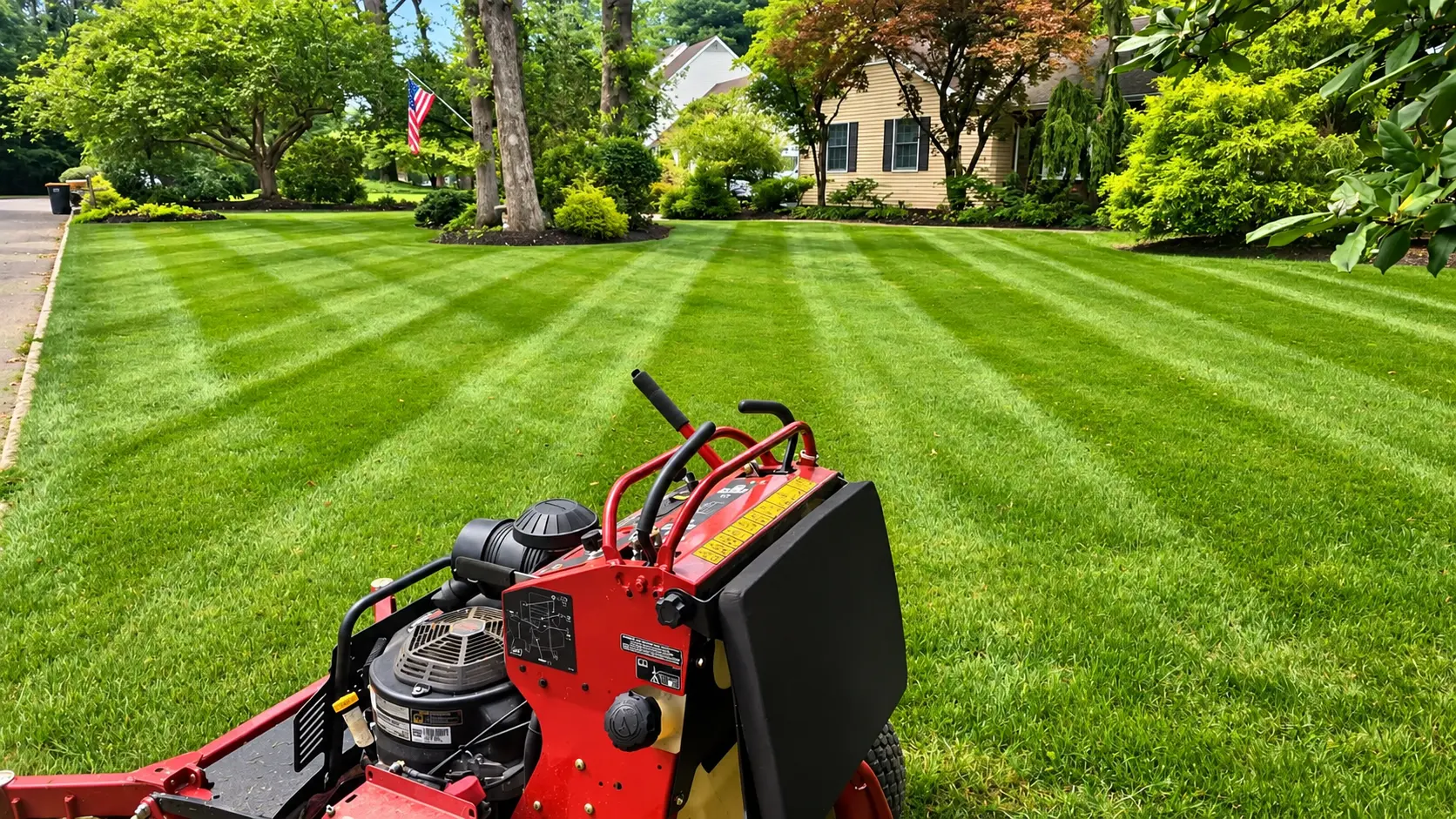
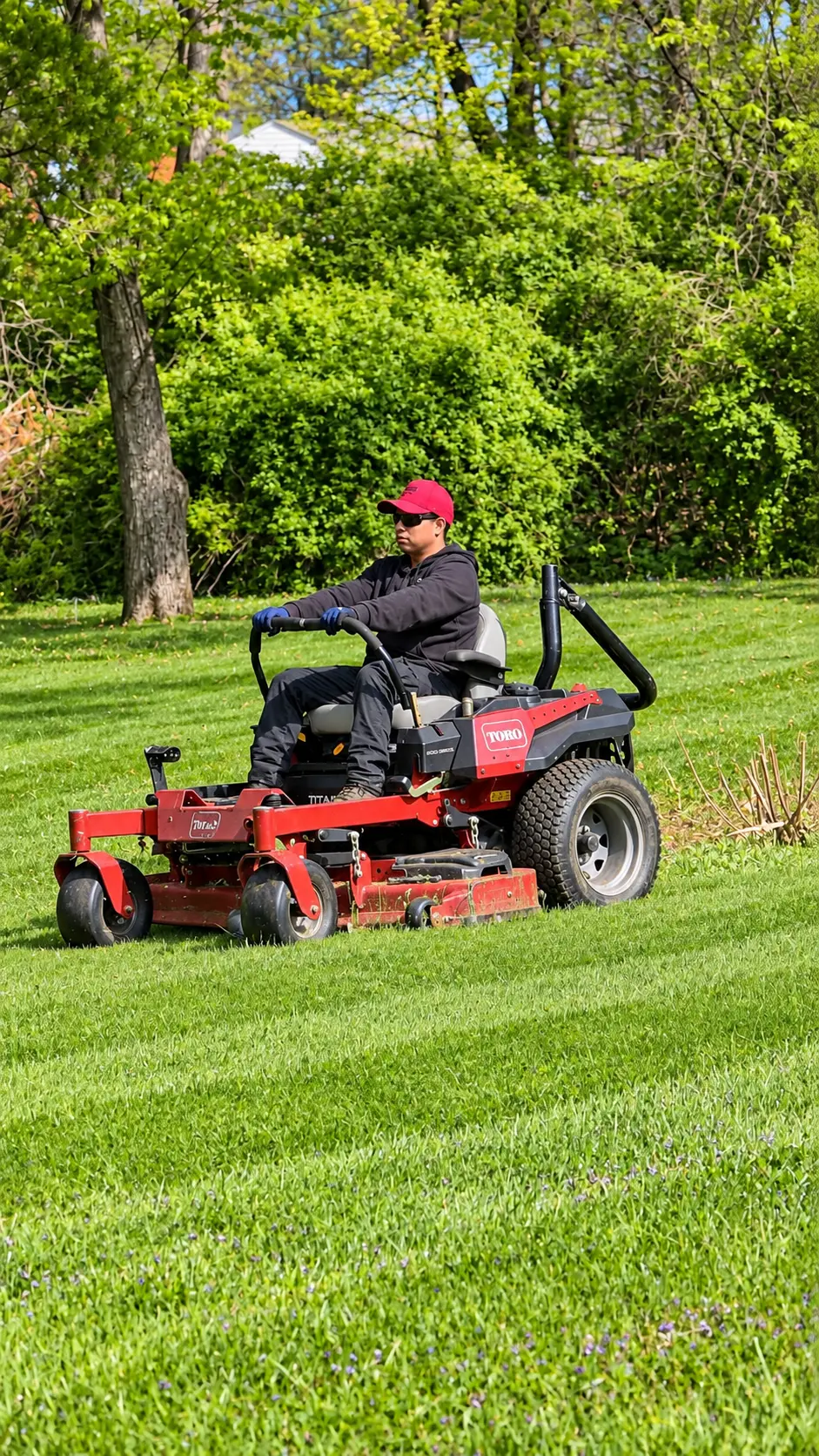
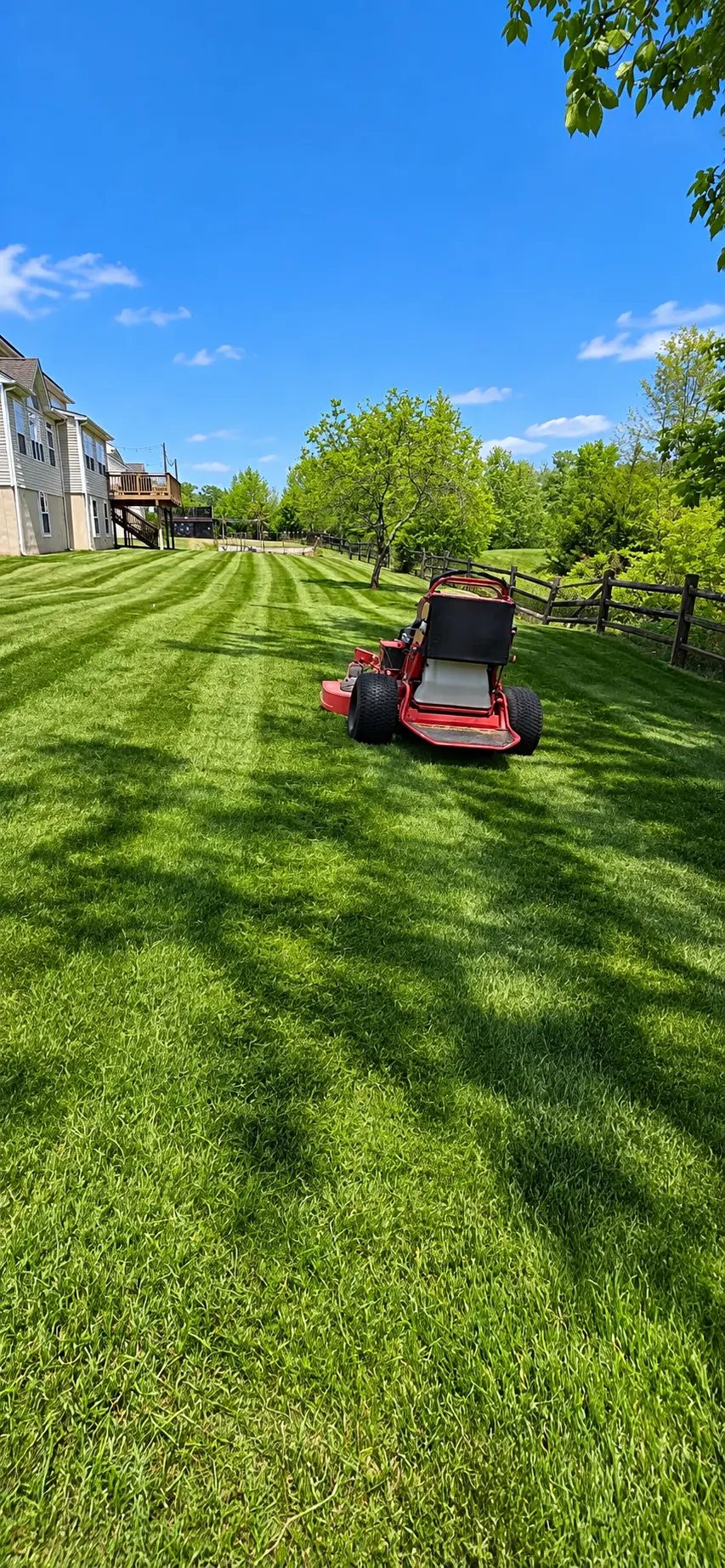
Every visit follows the same order so nothing gets skipped. We walk the property first and pick up branches, toys and trash that would turn into shrapnel under a mower deck. Then we cut, change the mowing pattern from the previous visit so the turf does not lean one direction, and finish the perimeter by hand where the mower cannot reach.
- Full cut of front, back and side lawn areas
- String trimming around fences, posts, trees, foundations and A/C units
- Mechanical edging along sidewalks, driveways and curb lines
- Clippings blown off all hard surfaces, never swept into the street
- A quick look at anything worth flagging: grubs, fungus, drainage, a dying shrub
Mowing height and why it matters in New Jersey
Somerset County lawns run on cool season grass: turf type tall fescue, Kentucky bluegrass and perennial ryegrass, usually mixed. That grass performs at roughly three to four inches, and it suffers when a crew scalps it to two inches to stretch the time between visits.
Taller grass shades its own root zone, holds soil moisture through a July dry spell and blocks crabgrass seed from getting the sunlight it needs to germinate. We also keep blades sharp so leaf tips get sliced instead of torn. A torn tip browns within a day and gives a whole lawn that dull, washed out look even right after a cut.
Weekly or biweekly
From April through June, growth in central New Jersey outruns a two week gap. Cutting more than a third of the blade at once stresses the plant and dumps heavy clumps of clippings that smother whatever is underneath, so weekly service is the right call in spring.
By midsummer growth slows and biweekly often holds up, especially on lawns without irrigation. Fall picks back up after the first cool rains. Tell us your budget and we will build a schedule around it rather than selling you visits your lawn does not need.
What affects the price
We quote after we see the property. A number over the phone before anyone looks at your yard is a guess, and guesses get corrected upward later.
- Total turf area, which matters more than lot size once you subtract house, driveway and beds
- Obstacles: trees, playsets, beds and fence lines all add trimming time
- Slopes and drainage ditches that need a walk behind mower or trimmer
- Gate width, since a locked or narrow gate can force a smaller machine
- Visit frequency, because overgrown lawns take longer and cost more per visit
Getting on the schedule
Call or text (848) 702-6937 and we will set a time to walk the property with you. You get a written price for the season and a regular service day. We work Monday through Saturday, 7:00am to 7:00pm, and rain pushes routes rather than canceling them.
We mow throughout Manville, Hillsborough, Bridgewater, Somerville, Raritan, Bound Brook, South Bound Brook, Franklin Township, Millstone and Whitehouse Station.
Want mowing, trimming, mulch and both cleanups handled by one crew? Our complete landscape care program bundles them into one season price.
Lawn Mowing questions from Manville and nearby towns
- How often should a lawn in Somerset County be mowed?
- Weekly from April into June, then every one to two weeks through summer depending on rainfall and irrigation, and weekly again during the fall flush. The rule that matters is never removing more than a third of the blade in one cut.
- Do you bag the clippings?
- We mulch clippings back into the lawn by default, which returns nitrogen and costs you nothing. If growth got ahead of the schedule or the lawn is wet, we bag so clumps do not smother the turf.
- What happens when it rains on my service day?
- We shift the route rather than skipping you. Mowing saturated ground rips turf and leaves ruts, so we would rather come the next dry day.
- Do I need to be home?
- No. We just need gate access and pets inside. Most clients never have to think about it once the schedule is set.